
The Las Vegas new construction market continues to navigate challenging conditions as we close out another quarter. Despite interest rates trending downward, sales remain slower than average, prompting major builders to rethink their strategies. From significant price cuts to shifting design trends, the landscape is evolving in ways that both buyers and industry watchers need to understand.
The overall market shows mixed signals across different regions of Las Vegas. North Las Vegas is experiencing an upward trend in sales, suggesting growing buyer interest in more affordable areas.
Meanwhile, the Northwest region is seeing a decline in activity. Other areas across the valley are maintaining consistent sales numbers, neither growing nor declining significantly. These regional variations highlight how location continues to play a crucial role in new construction performance, with buyers becoming increasingly selective about where they invest.
An interesting pattern has emerged when examining sales trends more closely. While sales remain below average overall, the distribution of those sales tells a compelling story about market dynamics.
The slowdown isn’t affecting all builders equally, and buyer preferences appear to be shifting toward different types of communities and price points. This suggests that the market is segmenting, with certain products and strategies resonating more strongly with today’s buyers than others.
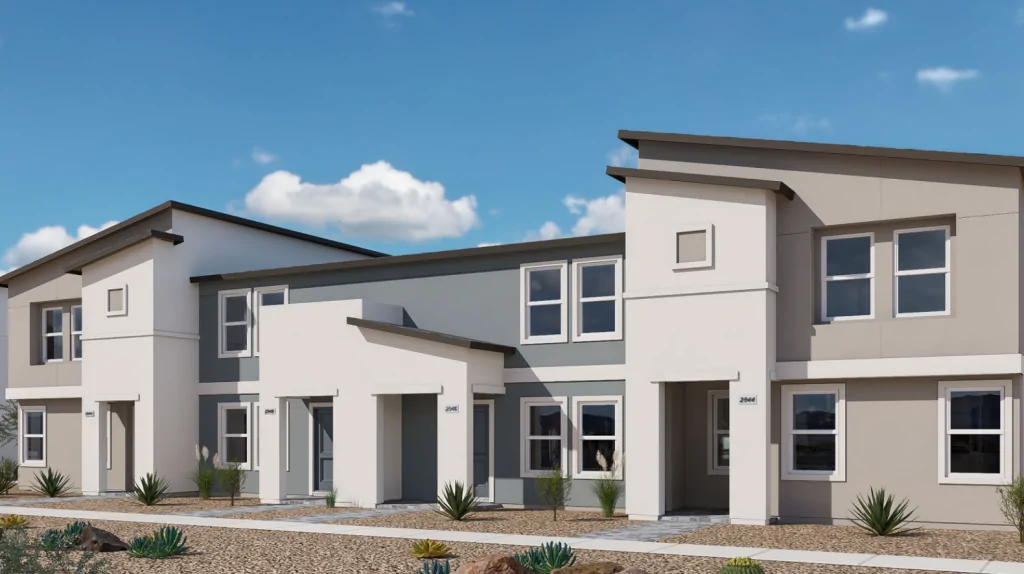
The top four builders experienced substantial sales reductions this quarter. DR Horton dropped from 420 to 386 sales, while Lennar saw the steepest decline from 525 to 350. Pulte fell from 373 to 274, and KB Homes decreased from 280 to 232.
What makes this particularly noteworthy is that smaller builders either maintained steady numbers or actually increased their sales. Other top-performing builders include Richmond, Century, Beazer, Touchstone, Toll Brothers, and Taylor Morrison.
Lennar’s strategy shift deserves special attention. While they met sales expectations, heavy incentives severely impacted their profit margins. In response, they slashed prices by 20% across their portfolio and cut $200,000 from the estate’s community pricing. They’ve also stopped accepting offers and adjusted their year-end outlook to prioritize profit over volume.
Given Lennar’s history of frequently changing its approach, it remains to be seen how long this strategy will last.
DR Horton townhomes are leading the market in sales volume, demonstrating strong demand for this product type. Their success suggests that buyers are gravitating toward more affordable entry points in the new construction market.
Trilogy Sunstone also deserves mention, having recently opened a new restaurant amenity that adds value to the community and enhances the lifestyle appeal for prospective buyers.
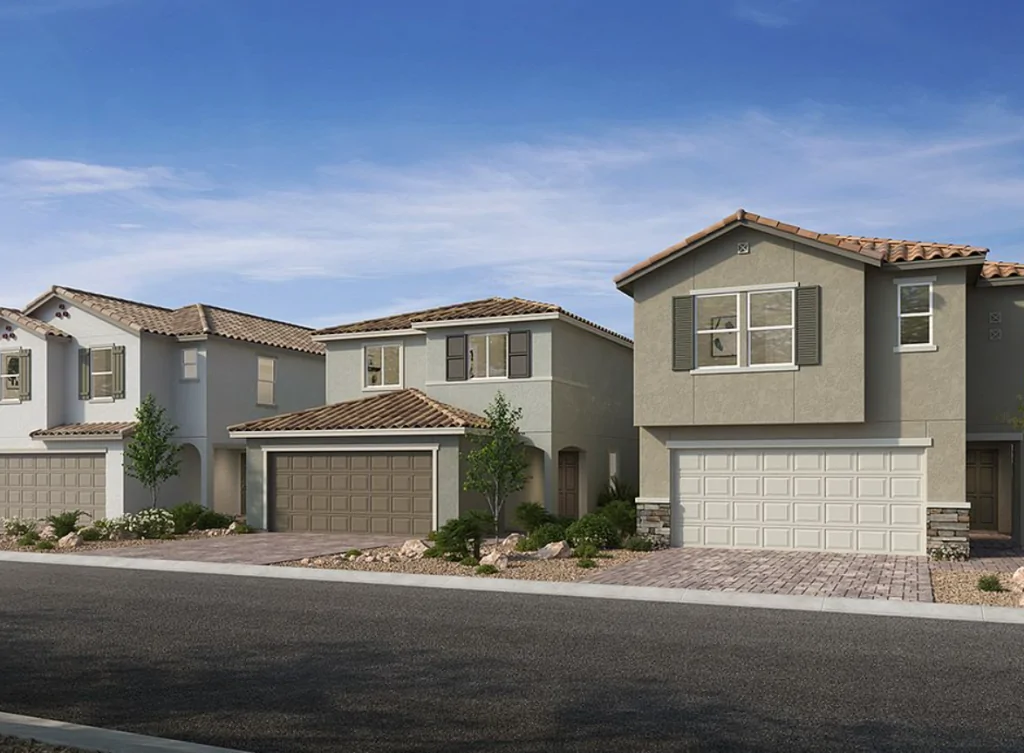
Several exciting developments are on the horizon. KB Homes is opening Meridian in Henderson around February, featuring both townhomes and single-family homes with pricing expected to start in the $300,000s. Toll Brothers recently opened models at two locations: Glenrock in Summerlin and Incanta Lago at Lake Las Vegas.
Other communities worth watching include Tri Pointe’s Lakeview Ridge and Beazer Homes’ Heritage Park, both of which could become significant players in their respective market segments.
The Las Vegas new construction market is clearly in transition, with traditional powerhouses reassessing their approaches while smaller builders find opportunities to gain ground. Lennar’s dramatic price cuts and strategic pivot signal that even the largest players are willing to sacrifice short-term volume for long-term profitability.
For buyers, this environment presents both opportunities and complexities. The aggressive incentives and price reductions create compelling purchase scenarios, but understanding the implications of rate buydowns and builder strategies is essential. As we head into next year, expect more of the same volatility as builders continue adjusting to a market that demands flexibility, value, and strategic positioning rather than the aggressive growth strategies that defined previous years.