
Most families moving to Las Vegas assume they can figure out the schools after they find the right house. That’s the wrong order. Las Vegas schools vary significantly by neighborhood, and if you don’t understand the system before you start shopping, you could easily end up zoned somewhere that doesn’t work for your family at all.
Las Vegas schools fall under the Clark County School District, one of the largest school districts in the country. That size alone tells you a lot. You can’t paint the whole system with a broad brush because the quality and experience can vary widely depending on the school, the neighborhood, and how you choose to navigate your options.
The truth is that some Las Vegas schools here are genuinely excellent, some are middle-of-the-road, and some are schools that informed families actively try to avoid. That range exists, and pretending otherwise doesn’t help anyone who is making a real decision about where to plant roots.
When you move into a neighborhood in Las Vegas, your child is automatically assigned to a public school based on your home address. The Clark County School District has an official zoning search tool on its website, and you should always verify your exact assigned Las Vegas schools before you buy a home.
Boundaries can and do change, so never assume your child is zoned for a specific school just because a neighbor’s kid attends there.
Magnet schools are public schools, but they operate outside of traditional neighborhood zoning, which means your child can attend one even if it’s not in your immediate area. Keep in mind that transportation is on you since these schools don’t run public bus routes for magnet students.
Admission is not guaranteed as it works through a lottery system, and you can apply to up to three magnet programs at a time. Some programs also have specific requirements, and certain ones even require an audition, so it’s worth reading the fine print before you apply.
Charter schools are considered public schools, but they operate independently from the traditional zoning structure of the Clark County School District. In Nevada, charters are governed by state law rather than the county or district, which gives them more flexibility in how they run.
If more students apply than there are available seats, the school uses a lottery system to determine enrollment. Open enrollment windows and lottery dates vary by school, so your best starting point is the CCSD website, where you can find that information and apply directly.
Private Las Vegas schools are the most straightforward option when it comes to access. You apply directly, pay tuition, and if you get in, you’re in. There are no zoning restrictions or district boundaries to worry about, which gives families a lot more flexibility in choosing a school that fits their child.
The main trade-off is the out-of-pocket cost, which can be significant depending on the school.
Families who have done their research tend to cluster in specific parts of the valley, and the same names come up over and over when schools are a priority.
Summerlin consistently tops the list because it combines strong family appeal with access to some of the better-regarded public schools in the district. A lot of the west valley campuses that families actively seek out are clustered here, and recent local school rankings back that up, with many of the highest-performing elementary and middle schools concentrated in this area.
Henderson is the other name you’ll hear constantly, particularly in pockets like Green Valley, Inspirada, Anthem, Seven Hills, and Cadence. Henderson has a suburban feel that appeals to relocating families, and it keeps showing up in family-oriented rankings because of its school access and overall livability. It’s not just reputation either. The data from sites like Niche points families toward Henderson repeatedly.
Southern Highlands is another area families tend to gravitate toward because it feels more residential, planned, and intentionally built for families. Individual school research still matters here, but the overall neighborhood profile tends to attract households with kids.
Skye Canyon and Centennial Hills also get attention from families looking for newer construction, a suburban feel, and better-than-average livability on the northwest side of the valley.
The brutal truth is that families don’t usually just buy “Las Vegas.” They buy specific pockets of the valley because school quality is uneven, and certain neighborhoods give you better odds either through strong zoning or through proximity to sought-after choice school options.
There are public schools in Las Vegas that genuinely compete with the best in the state, and certain names come up again and again when families are trying to move strategically.

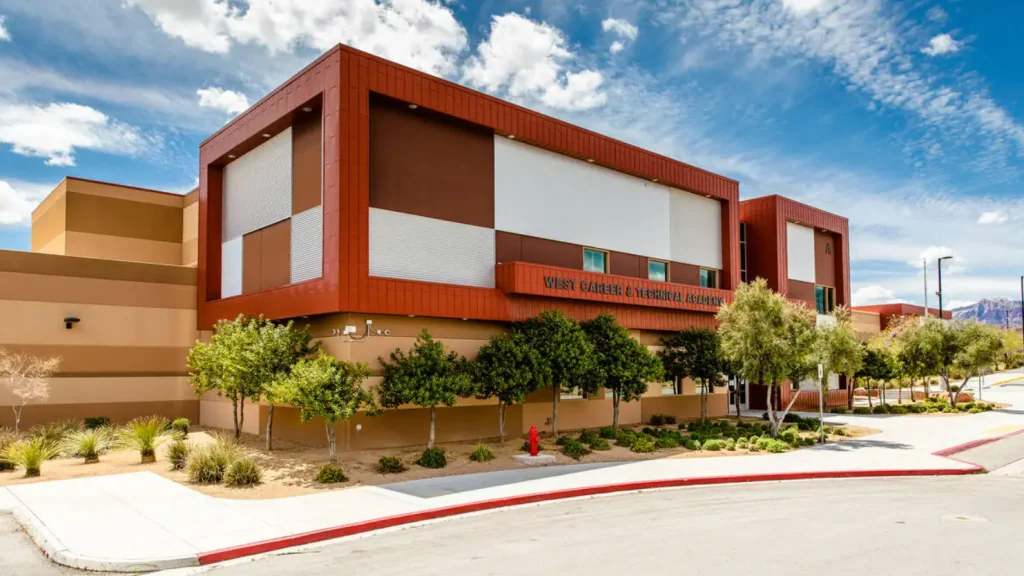
On the high school side, the schools that consistently dominate the rankings are largely magnet and career-technical campuses. Advanced Technologies Academy holds a 10/10 rating, West Career and Technical Academy and Southeast Career Technical Academy both hold an 8/10, and Coral Academy of Science Las Vegas at Sandy Ridge carries a 10/10 rating. These choice-school campuses in particular keep rising to the top of best public high school lists in the Las Vegas area.
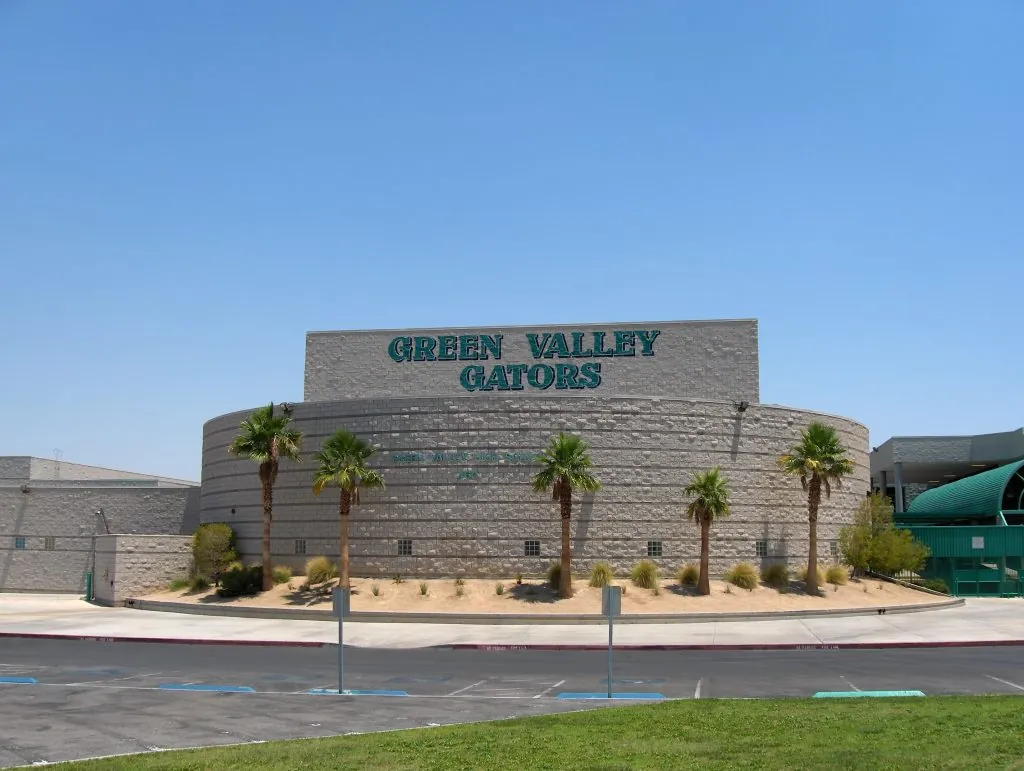
For families zoned into a traditional high school, the stronger options include Palo Verde High in Summerlin, with an 8/10; Coronado High in Henderson at 7/10, Arbor View High in northwest Las Vegas, Spring Valley High, Ed W. Clark High, and Green Valley High in Henderson, all rated in the 6 to 7 out of 10 range.
At the middle school level, the names families most often target are Sig Rogich Middle School in Summerlin, Bob Miller Middle School in Green Valley, and Del E. Webb Middle School in Anthem, Henderson, all rated B+, with quite a few more schools in that same tier worth looking into.

On the elementary school side, the higher-ranked public options families pay close attention to include Judy and John L. Goolsby Elementary in Summerlin South, Billy and Rosemary Vassiliadis Elementary in Summerlin West, John Vanderburg Elementary in Green Valley, Shirley and Bill Wallin Elementary in Madeira Canyon Henderson, and Robert and Sandy Ellis Elementary in Seven Hills Henderson. These Las Vegas schools carry A- ratings, and there are more schools in that tier worth exploring, depending on where you’re looking to buy.
Rankings used here come from Niche and GreatSchools, and both are worth bookmarking. That said, do not make a home purchase based on one ranking site alone. Use both, read why a school received its rating, and then go verify the actual zone, the commute, transportation eligibility, extracurricular offerings, and whether your child would thrive in a traditional campus, a STEM-focused school, a college-prep charter, or a career-technical setting. Rankings are a useful shortlist tool, but they are the starting point, not the finish line.
Zoning is one of the most underestimated parts of buying a home in Las Vegas. Two houses on the same street can sometimes fall into different school zones, which means doing your due diligence before signing anything is non-negotiable. Your real estate agent should be able to help you verify zoning for any property you’re seriously considering.
Zoning also affects your ability to get into certain magnet programs, since some preference is given to students within specific boundaries. It’s a layered system, and the families who navigate it best are the ones who understand the rules before they commit to a neighborhood.
Smart families don’t figure out Las Vegas schools after they fall in love with a house. They build their entire home search around their school strategy first. If Kathryn were advising a family moving to Las Vegas, here’s how she’d break it down.
If you want the simplest path, go with a neighborhood-first strategy. You pick the area based on the best zoned public school fit, and that becomes your anchor. It’s the least complicated option and works well for families who want a strong local school without the extra legwork of applying to choice programs.
If you have a neighborhood you love but the zoned school isn’t your top choice, go with a choice-school strategy. You pick the area you want to live in while simultaneously applying to your preferred magnet school, one or two charters, and keeping your zoned school as the backup. It takes more planning, but it gives you options.
If a private school is already on the table, none of the zoning details matter as much. You can choose your neighborhood based on commute, safety, housing, and lifestyle instead, because where your child goes to school won’t be tied to your address anyway.
The mistake families make most often when moving to Las Vegas, NV, is doing all of this in reverse. They find a house they love, get emotionally attached, and then start scrambling to figure out the Las Vegas schools. By that point, the options narrow fast. School strategy should always come before the home search, not after.